Showing posts with label comfort food. Show all posts

Tuesday, May 20, 2014

Sausage and Cannellini Beans

I'm not one to get starstruck and don't watch television often but a few weeks ago (yes, just recently) I discovered the cooking show, Extra Virgin, and became an instant fan.

Given my fondness for the food prepared so lovingly on Extra Virgin, I wanted the cookbook also named, Extra Virgin, that was about to be released and reserved a copy. It arrived a day or two after its release on May 6th and this is the first dish I've made from the cookbook.


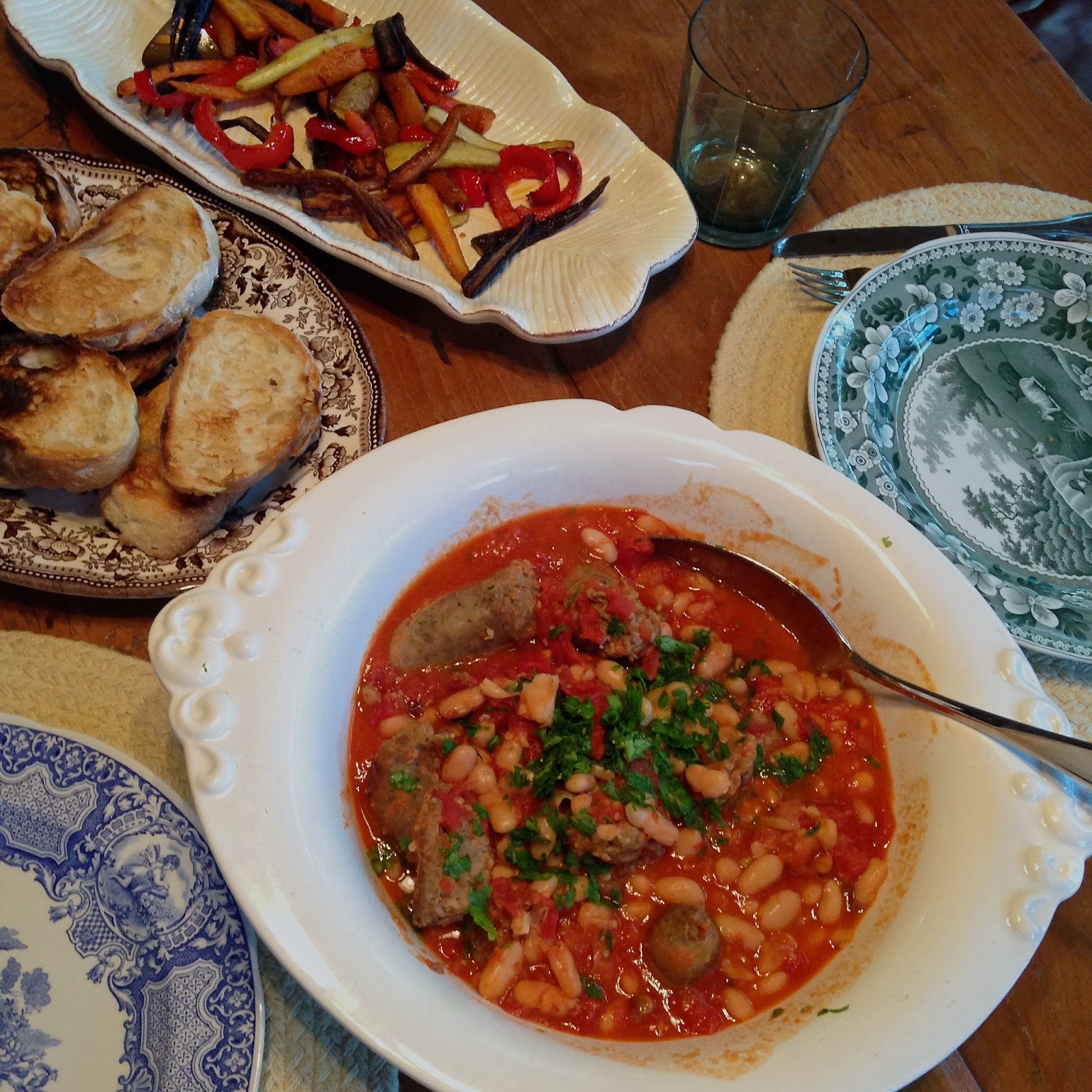
This dish, simply named, "Sausage And Beans" (salsiccie e fagioli) in the cookbook, was a hit with my family. I chose this recipe because my daughter loves Cannellini beans as does my son but he loves tomato sauce and meat even more. So this dish was perfect. I served it with toasted ciabatta to soak up some of the sauce. We placed a toast on our plates and ladled heaps of beans, red sauce, and sausage over the top. Delicious and flavorful!


Rather than the eight sausages called for in the recipe, I had a rope of sausage on hand which I cut into pieces before cooking, the reason the ends of the sausage look funky. Next time, I'll cook the rope sausage whole and slice after it's cooked or I'll buy individual sausages and keep the sausages whole for a nicer presentation.

Roasted carrots and red peppers was a nice side dish. To make week night dinners quick and easy I often roast vegetables in the oven while I'm preparing the main dish on the stovetop.


The recipe for Sausage and Beans can be found on the Cooking Channel website. It's a little different from the cookbook but sounds just as delicious.


Tuesday, February 7, 2012

Going Back To Our Roots | Locally Raised

Peasant woman planting beets, Vincent Van Gogh, 1885

During the winter in New England there's an abundance of hardy root vegetables at the market, especially farmers' markets. Snatch them up and incorporate them into your meals. My family doesn't love roots, but they enjoyed these meals. I just told them later what they ate! When buying roots, I can feed my family a nutritious meal and help out the farmers as well. 


Red Lentil, Beet, And Carrot Soup
This nourishing soup was made by sautéing carrots, red onion, and candy cane beet in a little olive oil, salt and pepper. The stock was made by simmering a ham bone and its meat from a previous meal (below) in vegetable broth that looked like a good amount to serve my family of four, about 6 cups. Seasonings were simply dried thyme, bay leaves, pepper, and a pinch of salt.


Candy Cane Beet

When all the sautéed vegetables became tender and flavorful, this I knew from the change in aroma when they started smelling sweet and wonderful, I added them to the stock along with a bag of red lentils. The stock was brought up to a boil, stirred, then simmered on low in a covered pot until the lentils were soft.

Short Ribs In Rich Beet Gravy


Shorts ribs from a local farm were browned separately then added to a slow cooker one morning which cooked all day making our home smell wonderful. But we had to wait a day to eat them since the gravy was fatty and needed extra attention.


After adding no-salt crushed tomatoes, a 28 oz. can, I added about a 1/4 cup of balsamic vinegar, some chopped carrots, celery, red onion, and a few red beets which resulted in a rich gravy after slow cooking on high for about six hours.


The meat was very fatty resulting in a fatty gravy. I removed the ribs and vegetables from the gravy and trimmed the fat from the ribs and placed them in separate glass storage containers.


Everything was refrigerated overnight so the fat would separate and could be skimmed from both the gravy and vegetables.


Once the fat was skimmed from the vegetables, they were pureed and added back to the skimmed gravy and reheated along with the trimmed rib meat while the mashed potatoes were made. The rich gravy and ribs were ladled over creamy mashed potatoes.


Roasted Red Beet Salad
After making a few successful meals with hidden beets I tried to go straight. Even though my family knew in the end that beets were hidden in their meals and tasted delicious, no one bought it!

All the leftover red beets I had were simply roasted with red onions, dried thyme, and balsamic vinegar then served along side hardy greens from a local organic farm. And beets taste great roasted with balsamic vinegar!


The beets can be somewhat hidden by adding more vegetables or fruit, like slices of orange, pears, or apple, and by adding flavorful creamy goat cheese. But I didn't have any.

All I did for a dressing was drizzle a little more balsamic vinegar and extra virgin olive oil over the top. Without anyone to share, I enjoyed beet salad for lunch a few days that week. Everyone else made their own favorite salad combinations.


Meet My Yellow Beet Chili
For this chili I shredded yellow beets and carrots, vegetables that are not popular among my familial nibblers. I was anxious to hear what they thought and this was their favorite!


Below is not cheese but grated yellow beets that imparted an nice earthiness, mild but slightly noticeable enough to make us stop and think about what we were eating for a moment. Also present are shredded carrots and a chopped onion. While sautéing the vegetables, I added a little cumin for its warm and smoky flavor.


Once the vegetables were tender and ready, the aroma of their sweetness being a hint, local beef was added along with drained red kidney beans, low-sodium beef broth, and pasta sauce, which I choose instead of canned tomatoes because it's all I could find that was local and jarred (a safer alternative to canned), and chili powder. All was cooked until the flavors evolved and smelled deliciously ready.


Freshly grated local cheddar cheese as a garnish is always great.


A Ham Meal With Parsnips
It was a tradition at Christmas time to have a ham meal. We stopped when our daughter was diagnosed with a chronic kidney disease, FSGS, because she was placed on a low-sodium diet. Now that she's in clinical remission I thought we'd try it again after learning that one of our local farmers had some fresh smoked ham. We'll continue to watch our sodium intake, though.


All the vegetables roasted nicely with the ham and no one objected to the parsnips. The leftover ham and bone provided the base for the red lentil soup above.


If They Won't Eat Turnips, Feed Them Rutabagas
More mild than turnips, rutabagas fit in almost unnoticeably with the other vegetables I served as a side dish to this local chicken.


Breakfast Potato and Rutabaga Medley
Then for breakfast, leftover vegetables were served with local eggs. For the breakfast potato and rutabaga medley, I chopped up the vegetables, sprinkled them with a little paprika, and sautéed in a little olive oil until warm.


Friday, October 14, 2011

Garlicky Cauliflower Parsnip Mashed Potatoes And Leftover Patties


One plan.

Two vegetables.

Three meals.

Four happy stomachs.

And a happy mom.

Our three days of cauliflower and parsnips started when I saw gorgeous cauliflower being set up at the market the other day. The cauliflower had just come in from a local grower! I don't remember where the parsnips were from but they were gorgeous as well (pictured here). I just had to have them.

The Plan: How many meals can I get this week from these two vegetables. The ideas developed each day and we ended up with a lunch, a dinner, and a breakfast.

Lunch
On Monday, with everyone home for the holiday, we had Rustic Cauliflower And Parsnip Soup for lunch which is posted here.


Dinner
On Wednesday, dinner was Garlicky Cauliflower Parsnip Mashed Potatoes along side baked salmon topped with basil pesto I had in the freezer, made from our garden at the end of summer. 


Breakfast
For breakfast, Garlicky Cauliflower Parsnip Mashed Potato Patties, made with the leftovers, along side over-easy eggs. 


Garlicky Cauliflower Parsnip Mashed Potatoes

Ingredients
4 medium-large red potatoes
3-4 cups roasted cauliflower, loosely packed chunks, see here
1 cup roasted parsnips, see here
1 tablespoon extra virgin olive oil or olive oil
4-6 roasted garlic cloves, depending on size and taste
About 1 1/2 - 2 cups milk, depending on desired consistency
About 1/4 cup butter, or favorite spread, to taste
1/2 teaspoon whole-grain mustard
Pepper to taste

For ease and efficiency, I roasted the garlic while salmon baked so I'll give that method. To find out how to otherwise roast garlic, check out sources on the internet. I was surprised that the garlic was ready in the time it took to bake the salmon.   

To roast garlic while baking salmon or other fish, place a little olive oil in a small baking sheet, cut a little off the top of the entire garlic bulb, place bulb upside down onto baking sheet (it's okay if some cloves separate). Preheat oven and roast for about 15 minutes or until the fish is done. Garlic is done when a clove is soft and mushy when squeezed, if not, leave garlic to roast a little longer. The garlic can also be roasted in aluminum foil in the same pan as the fish if there's room.


Meanwhile, boil the potatoes until fork tender. I quartered them to save time.


Squeeze 4 to 6 garlic cloves from the roasted garlic bulb into drained potatoes. Store and refrigerate the remaining garlic for something else (use within a week). Roasted garlic tastes great just spread over good crusty bread with sliced apples . . . some cheese . . . maybe?


Add roasted cauliflower and parsnips to the potatoes. Chop them up a little more first to make it easier to mash.


Mash with milk and butter (I use lactose-free milk and Earth Balance buttery spread). Start with about 1/4 cup of milk adding more until it looks right. Add butter to taste. Sprinkle on a little pepper to taste. When all combined, add mustard. Taste and add more if you want. I thought 1/4 teaspoon was perfect.


I kept the potatoes and vegetables rustic by leaving them thick and chunky.


* * *

Leftover Garlicky Cauliflower Parsnip Mashed Potato Patties

Ingredients
This recipe will work well if potatoes are chunky like above 
2 cups of leftover potatoes from above recipe
1 egg
1/2 cup breadcrumbs, I used Gillian's again - wheat, gluten, dairy free
1 tablespoon extra virgin olive oil or olive oil
I didn't have chives or shallots, but they would be a nice addition

Mix all ingredients together and let sit about 15-20 minutes so breadcrumbs absorb the moisture. If potatoes and egg are cold, it's okay to let it sit out. Otherwise, cover and refrigerate until ready. Form patties from mixture, about 1/4 cup each. Add oil to a medium sauté pan over medium-high heat. When hot, add patties. My pan fit four nicely. This recipe made 7 patties. 8 or 6 patties could easily be made by adjusting the patty size. Cook until a nice brown crust forms, flip and finish cooking.


The patties went well with eggs. I think it would also taste great with some horseradish or mustard, or both, with a slice of roast beef.


Tuesday, March 8, 2011

Fannie Farmer's Boston Baked Beans And Golden Corn Bread

What rich dark sweetness! I was brought back in time by this turn-of-the-century recipe. The strong molasses flavor gave me a sense of its popularity as a sweetener back in the day.


You may know from an earlier blog post that I'm taking a food writing course.  I'm also learning a little about American food history. When my text book, American Food, mentioned Fannie Farmer's The Boston School of Cooking Cookbook, I got excited thinking I had one! I ran over to the fireplace in the kitchen. There it was on the mantle. A prop. A member of a vignette of vintage books. Holding the book, I realized I had been brushing dust off its cover for a few years oblivious to its historical role in New England cooking. When I opened it, I saw it was originally written in 1896 and this is the 1938 edition!  How fun, I thought, to now try a few recipes.


Since we just covered Yankee foods, and my first assignment was a memoir about foods growing up, I chose to make Fannie Farmer's Boston baked beans for my family. I'm not from Boston but I grew up not far away in Woonsocket and remember having Petites baked beans on Saturdays. I remember going to Petites with my dad. There were always long lines and the beans were ladled into stoneware crocks. We would return to Petites often with a cleaned crock, ready for more beans. 

Staying with the historical theme, I thought it would be nice to cook beans in a vintage crock I have but was unsure about its safety so I used a cast iron pot instead.  First, I had to soak navy pea beans overnight. 

In the morning, I boiled the soaked beans. The recipe says, 

". . . cook until skins will burst, - which is best determined by taking a few beans on the tip of a spoon and blowing on them, when skins will burst if sufficiently cooked." 

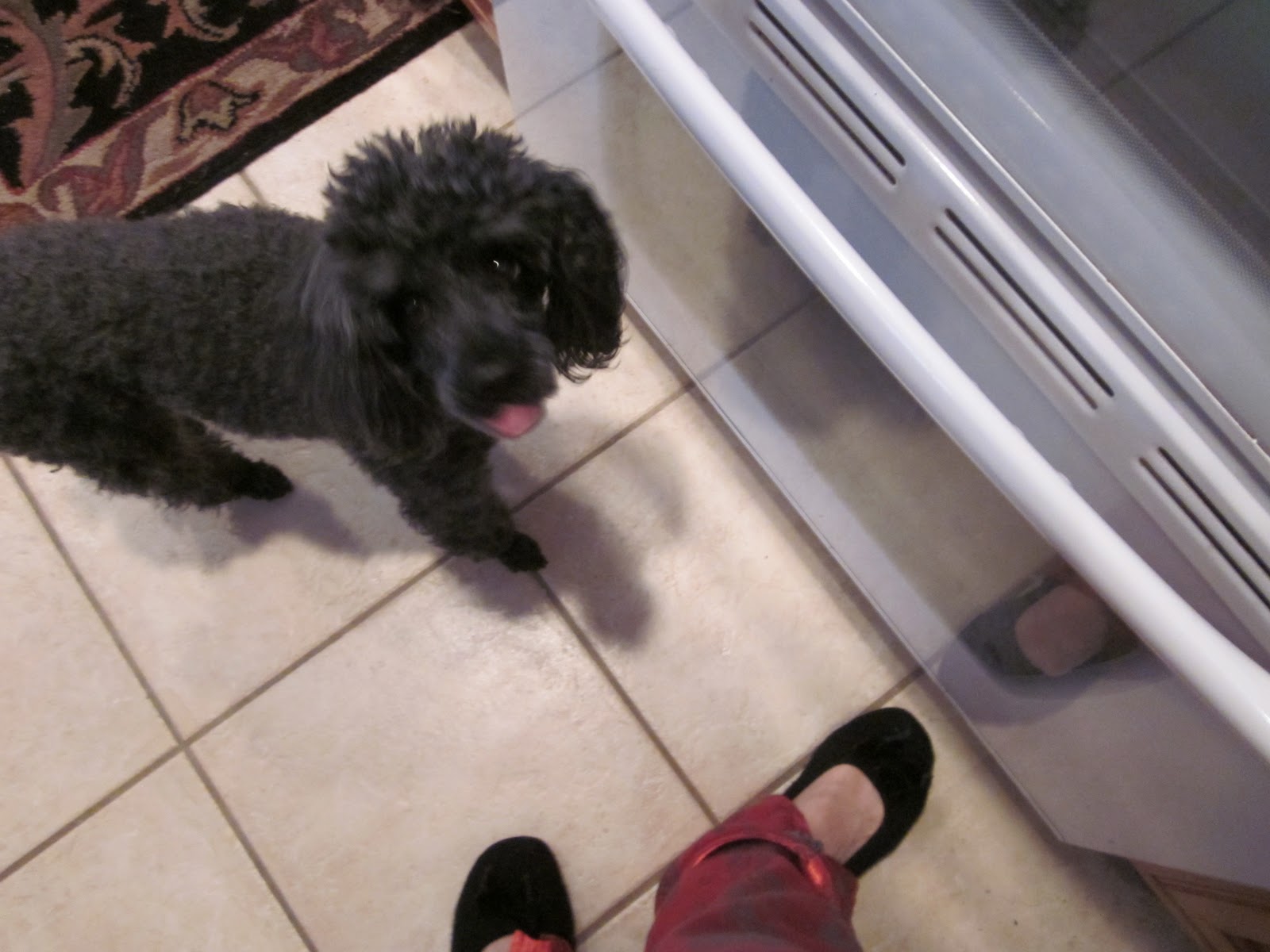
Okay, what does that mean? Will it take 15 minutes? 30 minutes? An hour? I looked it up on the internet where a recipe said cook for 1 to 2 hours. Still, not precise timing. After cooking for about 1 1/2 hours (oops, forgot to set the timer for 1 hour) I tried the technique Fannie suggests and the beans kept flying off the spoon when I blew on them, which made our mini French poodle, Sammy, very happy.  I was amused at first but gave up after a few tries.


Next I scalded the salt pork. Then I scraped. Again, not really being sure what this meant. Then I trimmed and added the salt pork to the beans.


 After 6 hours, the beans looked and smelled amazing!


I failed at making her Boston Baked Bread recipe but I had a backup. I whipped up her quick and easy corn bread recipe and baked it in these small cast iron pans. The corn bread tasted great, in a rustic old-fashioned sort of way, even though it was a little dry.


Boston Baked Beans
1 qt pea beans (navy pea beans)
3/4 lb fat salt pork
1 tbsp salt
3 tbsp sugar
1 tbsp to 1 cup molasses, according to taste
1/2 tsp mustard, if desired
Boiling water

"Pick over beans, cover with cold water, and soak overnight.  Drain, cover with fresh water, heat slowly (keeping water below boiling point), and cook until skins will burst, - which is best determined by taking a few beans on the tip of a spoon and blowing on them, when skins will burst if sufficiently cooked.  Drain beans.  Scald pork and scrape, remove 1/4 inch slice, and put in bottom of bean pot.  Cut through rind of remaining pork every half-inch, making cuts 1 inch deep.  Put beans in pot and bury pork in beans, leaving rind exposed.  Mix salt, molasses, and sugar, add 1 cup boiling water and pour over beans; then add enough more boiling water to cover beans.  Cover bean pot and bake 6 to 8 hours in slow oven (250 degrees F), uncovering the last hour of cooking, that rind may become brown and crisp. Add water as needed.  If pork mixed with lean is preferred, use less salt."

Golden Corn Cake
3/4 cup corn meal
1 cup flour
1/3 cup sugar
3 tsp baking powder
3/4 tsp salt
1 cup milk
1 egg, well beaten
2 tbsp shortening, melted (I used butter)

"Mix and sift dry ingredients; add milk, egg, and shortening; bake in shallow buttered pan 20 minutes in hot oven (425 degrees F).  For shortening, butter, chicken fat, or beef drippings may be used."

Ham Broth
I don't have a recipe but this is what I did.  I bought a small ham from Whole Foods.  I added about an inch of apple cider to the pan and covered with aluminum foil.  Cooked until heated through.  When done, I put the remaining apple cider in a small saute pan (a little more than a cup), added about 1/4 teaspoon molasses (not too much as it has a strong flavor), about 1/2 teaspoon dry mustard, and reduced to about half.  I poured the broth over slices of served ham.


After all the effort, I was glad we all liked it! My favorite quote comes from my son. When he first tasted it he said, "What's it made with? Love? If it's made with love, love tastes weird." But, once he got used to the flavor he really liked the beans too.

New copies of Fannie Merritt Farmer's Boston School of Cooking Cookbook can be found here